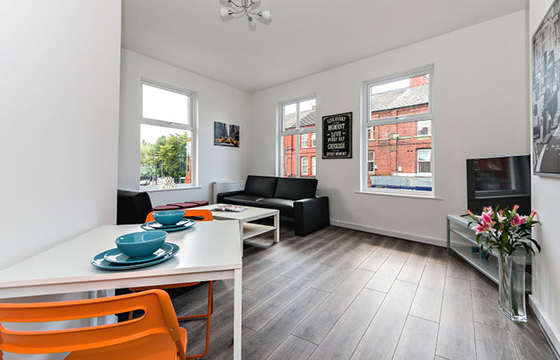
The Fresh UK Property outlook 2011
After reading a few different articles regarding the state of the UK property market and realising we have not done a UK property article in a while, I thought I would share my view on the outlook for the UK property market for 2011.
The end of 2010 was an interesting time for the property market, with not a lot of people looking to move just before Christmas and the extreme weather conditions putting a further dampener on house sales. However, mortgage approvals and sales are still holding up and I would expect as we go into spring, house sales will increase and prices will follow suit.
With news today that the Consumer Price Index has risen to 3.7% the BOE may well decide to increase interest rates in the coming months to try and curb this. However, the recent Consumer Price Index will not be taking into account the increase in Vat which has just come into play. I feel that consumers will have purchased their products earlier due to the Vat increase and this would of course bolster the CPI albeit temporarily.
It seems that in the face of fiscal restriction increasing the interest rate to try and slow inflation could be a dangerous move by the BOE however is it something they have to do? I am unsure as to the strength of the economy coming out of this recession and feel that an increase in interest rates too early could cause another fall in house prices. But then again, does the economy need this in the long run? What we need to remember when looking at the property market is that, unless we have new consumers entering the market, then it could fall into stagnation and at the moment, it is still hard for a first time buyer to get on that first rung of the ladder.
First time buyers are the lifeline of the market they need to be buying to keep the market moving. But then again, say first time buyers have to turn to renting does this mean that the market will be bolstered by Investors for the time being until there are some more attractive lending options available for the first time buyer?
What do you think?
I know one thing’s for certain, by buying one of our UK property investments with built in equity and reliable tenants in good locations you will be either weathering a storm or riding a wave of success.
Act now or forget your pension
Pensions, Savings, Isa’s….
What do all of these have in common?
Well other than shocking returns, the chances are that over half of you are relying on one of these come retirement.
Forgive my scepticism, I can only talk from past experience, you see I’ve got a share portfolio which I’m looking to for a pension, I’ve had this for 7 years and rather than make me any money, it’s actually fallen 3% in value.
The news is full of programmes investigating the current financial crisis; no avenue of investment seems to be safe.
Panorama recently investigated the vast fees and commissions some pension companies take from their clients, in one case a lady’s net return over 21 years was just 3%…it would have been 4% if she had not been paying various charges!
Now I’m sure that there are other pensions that would return her a larger sum but as she pointed out, how do you know which are any good?
Well the answer is, you really don’t…
Why Property?
For years I have tried to educate clients as to the benefits of investing in property as your pension. Not only do you benefit from any rental returns after mortgage payments but you will also over a number of years, benefit from capital growth.
It has been widely documented that property prices have taken a tumble in many locations, however if you buy smart and at a good price you massively reduce your risk.
The average pension pot in the UK is around £33,000; now for many of you it may not be too late to do something about this.
Below I will show you a simple way to make your money work for you in property.
Let’s take a 35 year old male that wants to retire at 55.
- Purchase a 1 bed apartment for £150,000. (Multiple locations across the south coast)
- Deposit needed £30,000 (20%)
- *Repayment Mortgage over 20 years = £735 pcm (4% interest rate)
- Rent PCM = £750 pcm (average for this price and location)
- Management Cost £75 pcm (10%)
- Additional payments = £60 pcm.
*Remember this is a repayment mortgage, not interest only, the long term goal is to pay this mortgage off over 20 years.
If you look at the £60 as your pension payments, in 20 years time you will have a pension pot worth £150,000, not taking into account any growth; giving you a return of £750 pcm.
Now the chances are that there will be capital growth during this period, if we take it at just 5% per year, your property will be worth £397,995 in 20 years time.
Rental also historically increases over time, if we take 5% here as well, your £750 would be worth £1,990 pcm in 20 years.
In Conclusion:
When investing in stocks and shares, it is extremely hard to get an idea of what they will be worth come retirement time. Brokers and IFA’s will bombard you with figures, but for the most part it’s a shot in the dark.
One thing that not is historical data on property and rental growth, this can be proved, as can the UK’s desperate need for more property and the demand for rental property in certain areas.
Many of you probably own a house and have done for a number of years, cast your mind back 20 years and recall the re-sale and rental values then. See what I mean?
In short:
- £30,000 investment in property now
- £60 pcm top up
Should provide you with…
- An asset worth £397,995 in 20 years time
- Income of £1,990 per month.
The Alternative:
Keep ploughing money into a product you’re not in control of and you probably don’t understand.
For information on how you can make your pension work best for you contact Fresh Invest on 01243 527327 or email info@freshinvest.co.uk.
Florida: paradise lost… or found?
Anybody else see this show? On ITV last night a TV program about British families that have moved to the USA in search of a better quality of life and standard of living, with beautiful weather and what they thought were endless opportunities all looked rosy! The program highlighted a couple of contrasting scenarios one, a family that had moved there and taken on a home cinema business and another, a property developer (with the most annoying wife in the world I might add) who had gone there to take advantage of how far his money could stretch.
The home cinema business did not work in the slightest and profits were on a consistent downward spiral and the property developer had actually done really well… which may contradict what I’m going to say later on in this article.
All of the increased demand from overseas and the ease of credit in the US had increased house prices substantially, which wasn’t a problem as long as inflation was present, banks were still lending and credit was still flowing. However once the flow of credit stopped the US began to see some problems. House prices dropped and businesses began to struggle. One of the problems with this in the eyes of the UK family living in the US is to do with the visa they need to live there. A couple of the stipulations are that they need to own a business in the US which is employing US citizens and that business needs to be profitable. Now that second one can be a bit of a problem in a recession and if they cannot reach it, then the family will be told they have to go back to the UK.
So now you have UK citizens being forced back home leaving their houses and businesses, businesses failing, credit drying up and house prices falling, of course this lead to many defaults on home loans and not only from the UK citizens also the US citizens and inevitably the bailout from the taxpayer to save the banks and get them lending again.
After all of this, US citizens were obviously struggling to get a mortgage and those that did have a mortgage may well have lost their jobs anyway. Property prices tumbled and many have seen it as a better bet to rent as opposed to try and fail to get another mortgage.
Now we come to our US properties. You can now purchase properties in Florida that are priced far below the building cost, which have a steady professional tenant in place and are yielding around 15%. The majority of these properties were built by developers and then given to the bank when the developer went into liquidation. The properties we are offering have been purchased from the bank and modernised (they were built recently but never lived in so needed a little tlc) then tenants have been heavily vetted and placed in the properties.
Click here for details of our properties for sale in Florida
A good time to invest in property
I was just reading an article by BBC news about how taking investment advice from your bank is a bad idea. I’m sure many people reading this article will have been asked to speak to one of the financial advisors available at their local bank, who will tell them that investing their money in one of the banks medium/high risk funds is a good bet and it will return x% and increase in capital by x%.
One of the ladies in the BBC news article had invested £100,000 into a “Cautious fund” and she quickly lost £40,000… unbelievable! Not only this, but the lady’s money was also decreasing at a faster rate because of the fact it was shrinking against the rate of inflation.
At a time of inflation coupled with low interest rates, ideally you would like to be in a position where you have an asset which is making you money and your borrowings on that asset are also, in real terms, shrinking while inflation is present. Your asset will be making you an increased amount of money with inflation and in comparison to your borrowings against it; the time at which you will have no outstanding finance will approach quickly. I am, of course talking about property.
It is no surprise that property investment has, for a long time, served as the main entry route to the forbes 100 rich list. The process of buying property in the right location at the right time and making sure the rent is going to cover the repayments you have on any borrowings, is just the start of it. The distance you can make your money stretch in property is insurmountable, by refinancing and keeping the cash flow on each property positive every month.
I have seen an article today from a top economic forecaster predicting that interest rates will remain at 0.5% until 2014; you may have also seen that the UK economy grew faster than expected last month inflation is at a rate of around 3% this typically means that the price of most goods and services are increasing at that rate and, ideally, your wage at work, as opposed to your borrowings on your property, which will be shrinking in comparison. Ideally I would be looking to invest in property now, take advantage of very little new build stock, the low interest rates available and use some of the positive cash flow generated every month to reduce my borrowings, so when interest rates do finally rise I am less susceptible to increased repayments.
See some of our UK investment opportunities here
More strong news for Cape Verde Property Investment
The International Monetary Fund (IMF) have conducted their eighth and final review of the Cape Verde Islands and yet again it is fantastic news for anyone invested or interested in investing in Cape Verde Property.
The IMF have stated that they believe Cape Verde’s growth will continue through 2010 with inflation remaining low. This is good news for the islands that are already showing very strong growth indicators and are becoming a real investment hotspot.
The IMF have shown that they believe that “Real GDP” will be increasing at a rate of around 6-7% pa over the next 5 years (“Real GDP” is the size of an economy with allowances for inflation) meaning that the value of all goods and services produced or passing through the country will be increasing by 6-7% and therefore the size of the economy will be growing and people, on average, will be able to benefit from a better standard of living and companies can begin to grow, allowing more money to go back into the development of infrastructure.
Lots of the growth for these islands comes from increased Tourism and an increased level of investment in property and then infrastructure. Property prices on the island have been rising on average by around 15% per year. The islands have remained a relatively undiscovered gem in comparison to the Caribbean and its northern counterpart, the Canary Islands, where property prices can be as much as 40% higher. They are only a 5 hour flight from the UK, have a time difference of only GMT – 2hours and benefit from 360 days of sunshine per year. Tourism figures have been increasing year on year and the island of Sal has seen increases of around 27.5% per year, as the only island with a truly international airport.
All of this information leads to a great location for investment in property serving the tourist industry. The investment we are presenting at Fresh Invest takes full advantage of the increasing tourism figures and can realistically provide investors with a net rental income of £12,133 per year for an investment as low as £32,294. All of this in a beachfront, 5* resort that gives purchasers 5 weeks free use per year.
To find out more about our investment in Cape Verde click here.
For the report by the IMF click here.
Capital Gains Tax Increase – Fresh views
With news that the new Con/Lib coalition are to raise the tax due on Capital Gains for anyone selling a second property Fresh Invest shares it’s views on how this may affect the property investment market.
Firstly let’s decide why the government has decided to impose this new tax there are 2 main reasons:
- The previous government has run up an astronomical budget deficit – hence the note recently left by the outgoing treasury minister Liam Byrne, to the new chief secretary David Laws which stated “Dear chief secretary, I’m afraid there is no money. Kind regards and good luck! Liam.” For this reason it is imperative that the new government make a lot of cuts, to bring the level of this deficit to an acceptable level they need to recoup money from the tax payers and this new capital gains tax will do just that.
- The second reason is that because of the slack lending criteria over the past decade many people have bought up a large amount of property in small holiday towns throughout the south of England, through this they artificially increased the prices of all the houses around these areas and they are now financially out of reach of the average worker in those towns.
The government is therefore going to impose an increased Capital Gains Tax on all second home sales as a way of raising cash for themselves and a way of stopping people becoming too greedy and putting house prices out of reach for first time buyers in holiday locations throughout the UK.
Now what could happen as a result of an increase in Capital Gains Tax?
The big sell off – This first scenario would really depend on when the government decides to impose this new tax, if they decided to impose the tax from the new tax year i.e. 6th of April 2011 then I would suspect a big sell off of second homes in desirable locations, creating a very large influx of supply into the property market and without the demand to match, probable falls in prices.
The buy and hold – The other scenario, I believe would also depend on the time the new tax is imposed. I would suspect that if it was to be imposed straight away then second home owners and investors alike may decide not to sell their properties as the gains are no longer high enough. Hopefully this will not cause any form of stagnation in the already fragile property market.
One thing is for sure. This will slow down the purchasing of property just for the capital gains that come with it, as the risks may begin to outweigh the possible rewards .An advantage of this however will mean that investors do not inflate property prices further and therefore eliminate first-time buyers from the market. Hopefully this will lead to longer, sustained growth.
Maybe it’s time to look to the overseas property market for your significant capital growth?
What are your views?
Fresh Invest is a property investment company with the aim of maximising our investor’s funds whilst minimising their risk. For more information see www.freshinvest.co.uk or phone 0800 043 69 56.
Spring market bounce defies political fears
The traditional slowdown in the property market coming up to the election, was not enough to eradicate the increase in housing sales, enquiries and prices that come with the spring season every year.
As the election comes around people traditionally slow their searches for new properties, in a hope to not overexposing themselves to possible new policies, which could leave them struggling once the new government has been decided. One such new policy could be an agreement to hold the interest rates at a current low level, this will of course be beneficial to anyone looking to trade up in the housing market and possibly leverage themselves further against the value of their property, if interest rates were due to increase this could be a problem for would be house buyers as they may struggle to match the repayments.
On the other hand it is normal in Britain for the property market to have somewhat of an upsurge in interest during spring, this can be attributed, partly to the sun making house hunting a more pleasant experience and also, to the budget which is often announced late in March and provides more certainty to market conditions.
It is good to see this news, as now the new government has been decided and are getting to work, we would expect the current trend in new house buyers and a slow increase in house prices to continue, as people are given more certainty in the position they will be in, come the next few months. There are a few interesting policies being taken into government, it will be interesting to see what the Lib-Dems have in store with the new “safe start” mortgage, designed to stop new buyers slipping into negative equity.
News of the increase in prices and sales came from RICS this month, as they published their latest monthly survey of some 245 members of the RICS who work as estate agents.
Fresh Invest is a property investment company with the aim of maximising our investor’s funds whilst minimising their risk. For more information see www.freshinvest.co.uk or phone 0800 043 69 56.
What will the election mean to the property market?
This election could mean boom or bust to the already fragile property market in the UK.
As we all know, possibly the largest challenge facing the new government will be our economy. The 3 big parties have outlined the steps they will take to try to deal with the £170bn deficit in the UK’s finances.
With it looking increasingly like a hung parliament, what will be the main points of debate from these parties on our property market?
Listed below are some of the key points of each party.
Conservative:
- Scrap home information packs
- Keep the £250,000 stamp duty threshold for the foreseeable future
- Add a new 5% stamp duty threshold for £1m properties from April 2011
- Increase inheritance tax threshold to £1m
- Regards Northern Rock, they have not stated whether they will consider remutualisation
- Include more local initiatives rather than large scale regional building plans
- Will look to split state and part owned banks into 2 parts, retail and investment
Labour:
- Add a new 5% stamp duty threshold for £1m properties from April 2011
- Keep the homebuyer direct scheme for low earners
- Keep Home Information Packs
- The £250,000 stamp duty threshold is due to expire in March 2012
- 10,000 affordable homes to be built a year by 2014
- Northern Rock: Manifesto pledge to consider remutualisation as an option, ‘while ensuring the sale generates maximum value for the taxpayer.’
- Will look to break up large banks but probably not into retail and investment
- Maintain the standard interest rate on the Support for Mortgage Interest Scheme at 6.08 per cent until December 2010.
Liberal Democrats:
- Charge VAT on new homes
- 1% “supertax” on homeowners with properties worth over £2m.
- Create a new “Safe Start” mortgage that keeps buyers from slipping into negative equity
- Propose a green loan for people to invest in home energy efficiency and micro-renewables
- Get rid of home information packs and keep energy performance certificates
- Consider remutualisation regards Northern Rock
- Will split state and part owned banks into retail and investment
- Concentrate on local rather than large regional building plans.
Fresh Invest is a property investment company with the aim of maximising our investor’s funds whilst minimising their risk. For more information see www.freshinvest.co.uk or phone 0800 043 69 56.
SIPP’s, The leaders debate and the £59 pension
After watching the leader’s debate last night, one thing stuck in my mind, it wasn’t any particular party policy (at the moment it seems they all have flaws somewhere) it was… the poor old lady that is currently having to live on £59 per week as her state pension!
The thing that I find the worst about this is that, we all know that by putting our pension in the hands of the government, we are never truly in control. I, like many others, like to be in control of my finances and this is where I would like to make the case for the Self Invested Personal Pension (SIPP) known.
Not only do I like to know how much of a pension I will have to live on come retirement age, but I would also like to be able to increase this amount which will either mean me retiring earlier than originally planned or living a more prosperous retirement period. The only way you can truly take control is by utilising the money in the form of a SIPP. There are fantastic benefits available for people putting money into a SIPP such as attracting tax relief at your tax rate; this means that if someone is taxed at 40% the government will add 40% to any contributions they make towards their SIPP!
Another advantage to a SIPP is the ability to borrow up to the value of 50% of your SIPP to increase your buying power this means; if an investor has a pension value of £100,000 they can then borrow a further £50,000 against this, giving a purchasing power of £150,000.
I believe that the only real way to have a secure and happy retirement is to use a SIPP to invest in property, be it in the UK or Overseas. The returns available in our Cape Verde Investment for example, show that if an investor had a pension value of around £84,000 they could increase this figure to around the £300,000 mark in 10 years, and still have an apartment providing a net profit per year of £12,000! This is based on pessimistic figures, assuming that growth isn’t as good as it has proven to be over the past few years.
We think now is a fantastic time to invest in any property with your SIPP, especially those in Cape Verde; which is a real emerging country currently receiving 15% growth per annum and tourism increases of around 27.5% pa expected to top 1,000,000 per year by 2015.
For more information on investing in property with the use of your pension including unlocking frozen pensions contact info@freshinvest.co.uk
UK home owners take advantage of low interest rates
BBC news reported last week that homeowners have been paying off record amounts of their mortgages over the course of the past year. In total UK homeowners paid off £22.3bn last year! We believe this is great news for the housing market and therefore the property investment market.
The reason for this is simple:
When the banks dropped their interest rates, UK home owners on a tracker or variable rate mortgage had 2 choices:
- Spend their increased discretionary income as they wish living a better lifestyle with luxury goods or,
- Invest their increased discretionary income back into their property.
Now this piece of news shows that the majority of UK homeowners have chosen to do the latter…
Well done UK! The reason this is so good for us as a nation is that we, and therefore the banks, are now not so heavily leveraged on our properties and when the Bank of England inevitably raises the interest rates, we will still be able to afford the repayments on our now smaller borrowings.
This piece of reassuring news can put your mind at rest that the UK house prices should remain buoyant and we will not see the “dead cat bounce”
Others will argue that the idea of lowering interest rates is to get the UK homeowners to spend their increased discretionary income in the consumer markets, However, I don’t agree.
As interest rates dropped UK homeowners continued to keep the consumer markets ticking over as they paid off their mortgages. It would seem we have got through the hard stage and now we are in a good position to continue spending in the consumer markets, whilst maintaining our now lower mortgage repayments… Either way we see this as good news!
Prices still rising in Cape Verde and we see no reason for it to stop.
Cape Verde property prices have been rising on average by 30% pa over the past 10 years and the occupancy of the only 5* hotel on Sal is currently around 95%.
If these trends were to continue you could put as little as £27,986 into a property on the fantastic Dunas Beach Resort now and on completion you would be able to recoup your £27,986 deposit + £19,579 on top as Cashback! Then to top it off a Net Profit of £8,117 pa from rentals!
Obviously this is the best case scenario but the figures speak for themselves.
Why would these trends continue?
Cape Verde is an archipelago of islands off of the North West coast of Africa it has:
- Year Round Sun (yes 360 days!)
- 107% rise in tourism over the past 5 years.
- No hurricanes.
- Temperatures of 22-30 degrees.
- 1 hour time difference from GMT.
- 5 hour flight from the UK.
- “EU special status” – granted $1.5 billion for infrastructure and tourism upgrades.
- A mostly Christian society.
Why Sal?
- Sal accounts for 69% of Cape Verde’s total rental market.
- It is the home of the new international airport with fantastic connections to the UK flights from Gatwick, Manchester and Birmingham.
- 2 “Ernie Els” golf courses are currently being developed on the island.
- Pristine white beaches.
- Beautiful clear sea.
Why Dunas Beach Resort?
- Dunas Beach Resort is a development of 1135 properties ranging from studios up to 5 bed villas.
- This is a European quality 5* resort with an astronomical build cost of €1,400 psqm (double that of the comparables used in our figures.)
- All properties are eligible for entry into a “self invested personal pension.”
- The resort operator is the fantastic Sol Melia group. Sol Melia are the biggest resort operators in the world and have a turnover of €100 million per month! With 150,000 hits on their reservation systems per day.
- The constructors of the resort are the San Jose constructors; they are the largest construction group in Europe with a turnover of €1.35 billion pa.
- Savills red book valuation on “bare land value” of €46 million.
- Being located on the South West coast of Sal, Dunas Beach Resort is in the best position to capitalize on this islands emergence.
- Completion mortgages readily available from many large banks.
- A cash flow positive developer (most developers handle a €60,000,000 negative cash flow throughout construction.) Phenomenally good performance through pre-sales has put them in this position of strength.
- The developer has an unused facility of €9,000,000 with Banif bank.
As you may well know we try our hardest to offer investments, where the risks are minimized as much as possible. Of course you could lower your risks even further by investing in a country that is already fully developed but at the same time you better also stretch your budget because this will not come cheap!
The best way to invest will be to choose the country that is yet to emerge, whilst ensuring that all risks have been covered and the country is infact emerging… This is exactly what we have done for you.
For more information on Dunas Beach Resort Request the latest brochure here
Lack of property boosts asking prices
If you remember i blogged in september regarding a lack of supply leading to increased prices, well it seems mortgage solutions agrees……better late than never! See their article here.
I personally i think they missed the biggest point which is the slow down in new build development. But you get the same result.
We still have a few new build developments with discounts available, if you are looking for a property investment click the link!
Another option is to buy a student property, some of our wealthiest investors specialise totally in student accommodation investment. A couple of them have yields close to 20% on massive portfolio’s!
Some investors don’t like the hassle of student property but if you have a management company set up all you need to do is collect the profits!
Thinking about investing in multiple units?
Finally a sensible policy for the purchase of multiple properties has been mentioned by the government, which should give the buy to let market a boost.
Rather than buy to let investors paying stamp duty for an entire bulk purchase, the government is looking at charging bulk buyers per individual property. Because of this, bulk purchasers of property are more likely to stay below thresholds for higher stamp duty rates.
Current stamp duty rates are as follows:
£125,000 – £250,000 = 1%
£250,000 – £500,000 = 3%
£500,000+ = 4%
See below for some figures on how this new policy would help you if you are looking to purchase multiple properties.
The current figures:
10 properties @ £150,000 = £1,500,000
Current stamp duty bill = £60,000
Anticipated figures:
10 properties @ £150,000 = £1,500,000
Anticipated stamp duty bill = £15,000
As you can see, on this particular transaction you would be saving 75% from your stamp duty tax bill!
Another new policy from the government could lead to barriers for Real Estate Investment Trust’s being lifted, this would allow REIT’s to invest in residential property and owners would hold shares in actual bricks and mortar rather than the REIT itself.
For a list of our bulk investment opportunities see here
See the article in The Times here
Cape Verde Looks to the Future
Known by many as “The European Caribbean”, Cape Verde is showing signs that it could be Europe’s saviour when it comes to affordable holidays with year round sun or overseas property investment.
With the credit crisis hitting most, holidaymakers are looking closer to home. Spain and the Canary Islands have both seen increases in tourism as well as many locations in the UK. However, if you really want year round sun in a secure location Cape Verde has to be at the top of the list!
Now Cape Verde is looking to boost tourism by implementing a Tourism Strategy Plan which will aim to increase tourism by 500,000 visitors by 2013.
Between the year 2000 and 2008 the total holidaymakers visiting Cape Verde rose by 11.4%!
This plan has been given the green light by ministers and looks set to boost tourism sector employment by as much as 60%!
This will obviously have a knock on effect for holiday apartments and villas, many average builders have fallen by the way side leaving some select developers to take up the baton. None more so than The Resort Group and it’s Dunas Beach Resort, the first developer in Cape Verde to sign up with a 5* developer. Sol Melia is the largest resort hotel group on the planet and their 5* hotels are widely recognised as some of the best in the world.
The best part is that you can purchase an apartment on this select development from just £72,326.
Deposits needed are just 35% so just £27,986 gets you an apartment in a 5* resort in Cape Verde; due to be the best hotel resort on the island! Check out Dunas Beach Resort Now!
Conclusions of 2009 – Opportunities for 2010
2009 – A year when then the smart investor used their time to set them up for 2010.
I think you will be in the minority if you haven’t suffered some kind of hardship this year, many investors have seen thier dreams of retirement severely set back.
This has not been confined to property, if you had shares or your money in some banks you could be in a worse situation!
So what should this year have taught the average investor?
1. The only way to build a profitable portfolio for the long term is by investing smart.
For me that means keeping at least 20% worth of equity in any property so you build yourself a buffer to combat any drop in values.
Investors have been stung by dropping loan to value rates, an unwillingness by lenders to remortgage on to rates previously offered has seen investors have to increase the equity in their properties, leaving them severely stretched.
Over the last 2 years i have seen investors with portfolio’s worth in excess of £100m go bankrupt, how can this be i hear you say.
What some property investors seem to misunderstand is that if you have a portfolio worth £100m, with lending on it of £90m. You actually have a portfolio worth £10m. If property prices drop 10%, what is the worth of your portfolio…Nothing!
If this happens you are entirely reliant on the income that your portfolio brings in, investors too highly geared normally cannot withstand more than a couple of months of empty properties.
2. Property Investment is not a get rich quick scheme – investors that use it as such usually find they have leveraged too high.
I am one of the biggest exponents of flipping property, i think that if you have the time and the know how it is possible to make decent profit this way but it is entirely dependent on a couple of factors.
Firstly, you need a massive amount of knowledge of the local market, this is not something that can be learnt quickly, so for this reason either keep to one area or find yourself a property specialist that you trust completely.
Secondly, always have another exit strategy, so if you are buying to re-sell, make sure that if worst case you can’t do this immediately, you can let the property out and pay your mortgage that way.
I have refurbed properties for over 6 years and we are also in the middle of developing apartments, i value every property investment opportunity by the number of exit strategies it provides.
3. The good times will come again, use times like these to research the market and decide where the best profits will be made next year and in the future.
If i could focus on the single most important factor i have taken from 2009 it’s that within the next month or so the vast majority of new build developers will completely run out of stock.
At Fresh Invest we are in contact with all major new build developers and 9 months ago all of them decided to stop all build that wasn’t already past footings. This decision was made because the last thing the market needed at that point was more new build stock. They are all building again now but this has created a back log where all finished sites have been sold and the next tranche of stock is still around 6 months away.
We have seen average discounts reduced from 40% 9 months ago, to 15%-20% now, and thats if you can find any stock. We have 2 developments left on our books which are selling at around 2 a day.
The first 6 months of 2010 will see property prices increase due to a lack of supply and increased demand as more confidence seeps back into the market.
I would take the first few months of 2010 to pick up the last pieces of good quality discount property around, there is only 1 way values are going to go in 2010.
New Opportunities through Fresh Invest:
1. We are launching a scheme that should give clients access to lender stock, for property investors looking to pick up great quality buy to let property in a particular area this is the one!
2. We are working hard on some student schemes, these should yield over 8%, have really low interest rates and start at around £80,000. With massive demand and industry professionals flocking to this market this is definitely one for the future!
As lending relaxes property investment increases!
It’s what most of us have been waiting for, the small time frame between lenders relaxing their criteria and property prices increasing.
We all knew that lenders were going to need to increase their loan to value rates, and that when they did it would make a massive difference to the property investment market.
Over the past few months half decent rates had been reserved for investors with 40% deposits. Now i do not condone most no money down deals, i think they lead to more problems than they alleviate.
However! the case for the investor with a healthy 20% deposit should be heard, they have a large amount of equity in their property and should now be relatively safe from negative equity.
It seems the lenders now agree.
What are the new rates like?
Since the BOE base rate reached 0.5% products requiring a 15% deposit have risen from 169 to 231. And the number of products requiring just 10% upfront has gone up from 89 to 105 in the last month alone.
This is certainly a massive difference to a year or even 6 months ago.
Nationwide has already announced a new influx of deals, including some at 85% loan to value and they have also released some of their best rates at 70% ltv, from their previous at 60%.
They have even released a special 90% ltv rate for investors that hold one of their flexaccounts. These start at 4.63% for a 2 year tracker.
The Woolwich have also released details of their new 75% ltv rates, this is the first time the lender has made it to 75% for at least a year. The new mortgages include a lifetime tracker on 2.94% and 2 year fixed on 3.99%.
Abbey also have a new range out, these are exclusively for their current account customers. One of their best is a 90% ltv 3 year fixed rate at 5.99%, their cheapest mortgages are now available at 70% from 60%.
So why the sudden change?
It seems that lenders now believe that the worst is behind us, in short if they are offering 90% ltv mortgage they believe that property prices will not drop more than 10%, in fact they believe that prices will increase in the future, as now being reported in most news channels.
Just last month hsbc pledged to lend an extra £500m at 90% ltv by the end of this year!
Add this to the political pressure being put on lenders by the government, this was summed up by the governments own lending house northern rock as they released some of the best ltv rates seen for over a year!
So should i buy now?
If you are looking at getitng into property investment there has never been a better time to invest, there are still seller under pressure but now there is also the promise of some competitive rates. This means that not only can you buy cheap, you can also borrow cheaply!
We don’t expect this to remain the case for long so why not add or start your portfolio with some discounted property now!
Also check out our UK Buying Guide for handy hints and tips.
With stability grows confidence!
Shopping at the weekend I was amazed at how busy all the shops were, now I know it’s christmas and all that but perhaps this could be the final piece of the puzzle that will lead to us climbing out of recession.
It does seem for the first time in months that the public are not as worried as they were about the economy.
According to the times, people are more optimistic about the economy than at any time over the last 18 months.
What are the reasons for this?
- We have just had the highest october high street sales for 7 years.
- The pound rose to it’s highest level against the dollar.
- The ftse closed up 92.5 points, at a two week high.
- Alistair Darling is looking at cutting business taxes to encourage people to have faith in labour.
What do people think about these facts?
Is this a result of the “quantitive easing” which we (the public) are going to be penalised for after the elections?
or
Is this the start of Britain pulling itself out of recession?
Could the points above be the catalyst that leads to us out of our economic quagmire?
What does this mean for the property investment market?
In my opinion it means that the worst is now firmly behind us, the increased confidence on the high street coupled with the low supply of new build property coming on the market means robust values.
Investors can now take advantage of a unique position in the property investment market. There are still a small amount of reposessed property and good discounted new build units available which if bought now are sure to increase in value over the next year.
Investors purchasing these can then re-mortgage on much better loan to value rates.
The property investment market is ripe at the moment, will investors choose to invest or wait until the moment has passed and lament on a missed opportunity?
As always, we will probably see both.
If you want details of some of our UK Buy to Let Opportunities at the moment please let us know, they are selling fast!
Property Investment – Why you actually have no choice!
I have noticed many of our investors are holding off investing in buy to let property, instead choosing to make doubly sure that the market is on its way to a recovery before jumping in.
Not a bad idea, it certainly mitigates your risk in the property investment market.
But! are you not missing out on the very time when developers are looking to do discounted deals?
Developers are no different from us, they want to make as much profit as possible which means getting the very best price they can.
If you want to sell your car, your only going to discount it if you really need to.
If suddenly all other cars dissapeared and yours was one of the only ones available you would think you were on to a winner and charge top whack!
This is what will happen with new build property soon. The property investment market is recovering and new build property supply is decreasing!
Soon 20% discounts on new build property will only be available in the very worst developments or the largest bulk opportunities.
When this happens it will be no use complaining you have missed the boat, it will have sailed and you will face the choice of not investing at all or paying top prices for buy to let property.
If you have £20,000 spare at the moment you have 3 choices as far as i can see.
1. Leave it in a savings account.
You will probably achieve 3% on your money but it is relatively safe.
2. Invest it in shares.
But what shares? most people have probably seen their share portfolio’s decrease by at least 30% over the last year so do you want to risk it again? even if you do only the very highest risk shares wiull give you the kind of returns that you can expect from a buy to let property.
3. Buy to Let Property Investment.
Just this week we have sold 15 units in 2 different developments, one in Gravesend in Kent, £21,000 into a mortgage gets you a return of 8% and clear profit of £300 per month. One in Salford costs £20,000 into a mortgage and a return of nearly 9% with profit of £330 per month.
Most of these units are already let, one of our bulk purchasers rented 5 apartments in Gravesend in one day. We only offer property in areas where we know there is high demand.
We are seeing more investors buy now than for many years, all of those that are not have to ask themselves why not? Are you perhaps missing out when others are taking advantage of this unique situation?
We know 2 things for definite.
1. The property market will recover at some point.
2. The yields you can achieve today are some of the highest we have ever seen.
These 2 points make it impossible not to at least consider property as an investment strategy.
Quite simply, if you want a good return on your money with little risk and the prospect of high capital growth do you really have a choice?
3 Reasons why you should start investing in property again.
Property Investment….over the last 18 months probably the furthest thing from your mind!
So why start investing now?
1. Mortgage rates are relatively low.
Ok so the ltv rate isn’t great but the actual rates are pretty good and with our economy suffering i believe there is little chance of the boe base rate increasing.
An average 65% ltv mortgage on a new build flat is around 5% with second hand property mortgages available from 75% at 5% rate.
In historical terms the rate is a lot lower than it has been for a long while.
As ever, if you are building a property investment portfolio you need the mortgage rates to remain fairly low to allow you to repay the mortgage loan, another up shot is that when buy to let mortgages recover the ltv rates will increase, allowing you to remortgage.
2. Property supply is at an all time low!
With most new build developers choosing to stop building last year we now face the fact that it will take these housebuilders a year to get new schemes out of the ground.
This will mean that for around a year from now new properties will be some what of a rarity. New build property accounted for a massive part of the property bought last year, without this supply and with increasing demand prices are sure to increase.
UK Property Investment has always relied to a large part on developers willing to discount their property for either bulk sales or quick completions but if they have no stock….
3. It’s cheaper to buy than rent.
Recent research has shown that for the first time in ages it is actually cheaper to buy than rent, well outside of London anyway!
Abbey found the average rent of £434pm compares to a mortgage payment of £382pm (with a 25% deposit). That’s a saving of £52pm. People in Wales and the north west would save on average £90pm. We can also overpay or save whilst interest rates are low.
So for those looking to start in property investment now looks like an ideal time.
Economies of scale
One thing you will notice a lot in terms of property investment is the economies of scale that are involved.
What I mean is the bigger the purchase the bigger the discount. So essentially the best discounts are only available to those investors of a high net worth.
However here at Fresh Invest we like to try and please everyone. So we will aim to use the larger purchasing power of our Bulk Investors and filter the discounts obtained through to our investors that are only looking for individual buy to let properties.
So any of our investors can register an interest in our bulk deals, then once a Fund has secured the properties we can start to sell to the single investor on behalf of the fund, this will be at a greatly reduced from list price.
This is good for the bulk buyers, as often they can get an almost instant return on their investment with the added choice of a great profit or an income stream from whichever properties they chose to hold and let privately.
A typical example is one of our current Opportunities in London. The developer is offering these to the single investor at 10% discount. However we have now secured these apartments at a larger discount with the use of a fund and can now offer these to the single investor at a discount of 20% leading to an average saving of around £20,000 to the single investor.
At the moment we have an opportunity in Boscombe. Now if you purchase 3 units in Boscombe and the developer would entertain a 25% discount however for one property the developer would only give a 15% discount. If we can get a bulk buyer to negotiate a very feasible discount of 30% for 10 units then sell back to the individual investor at a rate of 20% or 25% off of list price, the individual investor has saved 5-10%
For more information on this register with fresh invest here
Property Investment – Do You Now Have a Choice?
Well lets look at the positives.
As my nan always says….you’ve always got your health!
To which i respond …..I’ll need it when I’m sleeping rough!
Seriously though, many people face the very real prospect of having to increase their pensions and savings to the level they were previously at, the only trouble is, they have even less time to do it!
2 Years ago your savings and pension values would most probably be well on their way to keeping you in the style you had become accustomed.
No Longer, you now have to think fairly seriously about increasing the value of your savings, so whats the best way to do that?
As far as i can see, 2 options come to mind.
1. High risk, but potentially high reward share dealing.
2. Property
Let me discredit the first one quickly, if you have never dealt with shares before i wouldn’t recommend such drastic action, if you fancy giving your hard earned to a broker think seriously about the fact it will probably end up with a banker who had a large part to play in losing you that money in the first place!
So we come to property investment.
Hardly surprising as that is what you do for a living i hear you say!
True, it’s also what i know best.
However it also produces returns of between 6-13% along with the capital growth which will undoubtedly occur whilst investing at the bottom of the market.
Look abroad and the yield can sometimes be up to 20% with capital growth upwards of 15% per annum.
In the past, many investors have discounted property because of the “risk” attached.
Unfortunately these same investors now may not have much of a choice!
If you need your pension to return you a decent amount and do not have 40 years in which to grow it you may simply have to look at property as an investment vehicle.
I’m currently looking at property in London that returns 7% and overseas property in Cape Verde that returns 12%.
Similar London property was selling 2 years ago at £400,000, now on the market at £270,000. If we reach the prices of yesteryear there is £130,000 profit for you.
The units in Dunas Beach Resort, Cape Verde look set to return in the region of £10,000 per year; and if capital growth continues in the area, they should only cost me £2,000 to purchase outright!
If the circumstances above sound familiar, we can help. Find me at Fresh Invest Limited.
Or call me freephone on 0800 043 69 56.